- •Hire within a realistic commuting radius of the plant — local hires stay longer than relocated ones.
- •Partnerships with ITIs, polytechnics and apprenticeship programmes create a steady pipeline for technician roles.
- •Verify certifications at source, design shifts and transport around local realities, and plan compliance state by state.
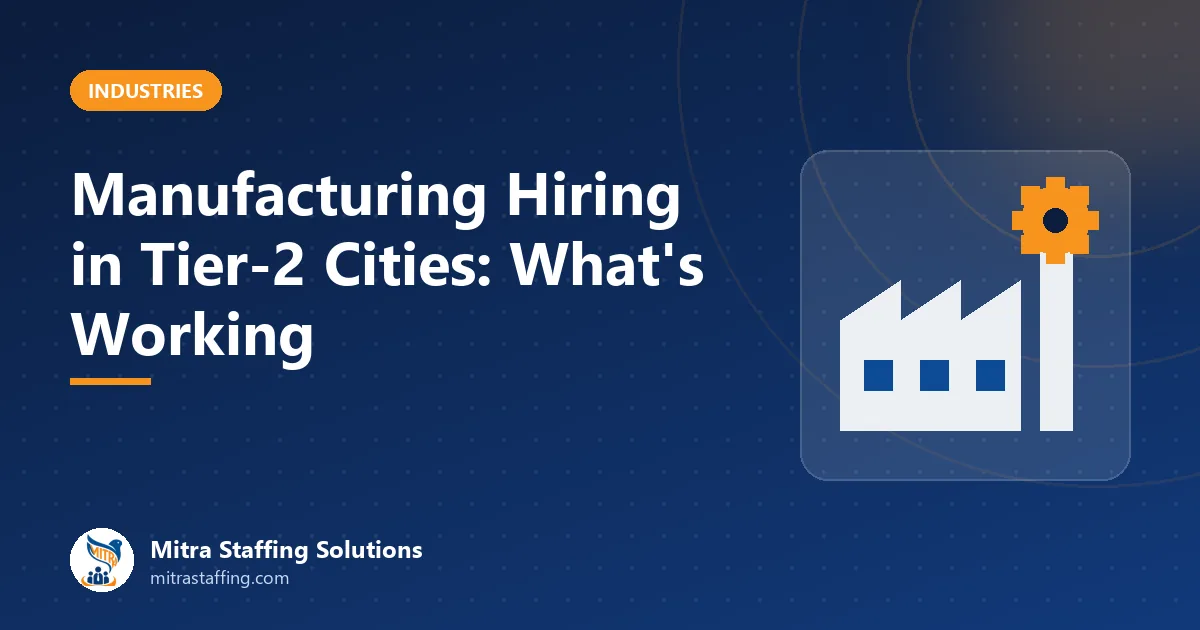
What's working in Tier-2 manufacturing hiring is local, pipeline-driven recruitment: sourcing within a realistic commute of the plant, building year-round partnerships with ITIs and polytechnics, verifying technical certifications at source, and designing shifts, transport and pay around how people in that town actually live. Companies that simply copy their metro hiring playbook into Bhopal, Coimbatore or Rajkot tend to see slow fills and high early attrition.
India's manufacturing footprint has been spreading for years — around clusters such as Coimbatore and Hosur in Tamil Nadu, Rajkot and Sanand in Gujarat, Pithampur near Indore, Bhopal's industrial belt, and Chhatrapati Sambhajinagar (Aurangabad) and Nashik in Maharashtra. Here is what our engineering and manufacturing recruiters have learned staffing plants in these markets.
Why Tier-2 hiring is different
Tier-2 talent markets are smaller and more relationship-driven than metros. A plant may be the largest employer for miles, word of mouth travels fast, and a bad experience with one batch of hires can affect the next three. At the same time, the people you need — trained technicians, machine operators, quality inspectors and maintenance staff — often prefer to work close to home and family, which is a real advantage if you hire locally.
1. Hire within a realistic commuting radius
The single strongest predictor of retention we see for shop-floor roles is distance from home to plant. Candidates relocated from other states often leave after the first festival break or when a closer opportunity appears. We map candidate pools by village, town and bus route before we start sourcing, and prioritise people who can reach the plant within a reasonable daily commute.
2. Build year-round ITI and polytechnic partnerships
Industrial Training Institutes and polytechnics are the backbone of technician hiring. The plants that hire well do not show up only at campus placement time; they stay in touch through the year, offer plant visits and guest sessions, and use apprenticeship programmes — including the National Apprenticeship Promotion Scheme — to train people on their own equipment before making permanent offers.
- Identify the trades you need most — fitter, electrician, machinist, welder, instrument mechanic — and the institutes that teach them well.
- Offer apprenticeships tied to clear criteria for a full-time offer.
- Involve your own supervisors in assessments so students meet the people they will work with.
- Track which institutes produce hires who stay and perform, and invest more there.
3. Verify certifications at source
Technical and safety credentials matter more on a shop floor than almost anywhere else. Welding qualifications, NDT certifications, electrical licences, boiler attendant certificates and safety training should be verified directly with the issuing body or institute, and practical trade tests should confirm the skills on paper. Fake or inflated certificates are a real risk in high-volume hiring.
4. Design shifts, transport and pay for local realities
Company transport, canteen facilities, predictable shift rosters and on-time wages often matter more to Tier-2 shop-floor candidates than small salary differences. Night-shift arrangements, safe transport for women employees and leave around local festivals and harvest seasons all affect whether people join and stay.
Swipe sideways to see the full table →
| Role category | Best sourcing channel | Typical time to fill |
|---|---|---|
| Machine operators and helpers | Local referrals, community outreach, temporary staffing | Days to 2 weeks |
| Technicians (fitter, electrician, welder) | ITIs, polytechnics, apprenticeships | 2–4 weeks |
| Quality and maintenance engineers | Regional engineering colleges, industry networks | 3–6 weeks |
| Production and plant leadership | Headhunting across clusters and industries | 6–12 weeks |
5. Hire supervisors who know the community
Front-line supervisors set the daily experience for shop-floor teams. Supervisors who speak the local language, understand local customs and are respected in the community resolve issues before they become exits. Where possible, grow them from your own high-performing operators and give them basic people-management training.
Supervisor training does not need to be elaborate. A few half-day sessions on giving clear instructions, handling attendance issues fairly, spotting safety risks and escalating grievances early will pay for themselves quickly. Supervisors are also your best source of referrals: when they trust the company, they bring in reliable people from their own networks, and those referred hires tend to settle in faster because someone they know is already on the floor.
6. Use temporary staffing to absorb ramp-ups
New lines, export orders and seasonal peaks create sudden demand for operators, packers and helpers that a plant's permanent hiring process cannot meet in time. A temporary staffing partner with a local bench can deploy trained associates within days, handle attendance and payroll, and release them when volumes normalise. The best performers become a ready pool for permanent roles.
A 90-day hiring plan for a new or expanding plant
Plants that start hiring early, in a planned sequence, avoid the last-minute scramble that drives up costs and attrition. A simple sequence we often use:
- Days 1–30: hire the plant head, production, quality and maintenance leads; map local talent pools; sign ITI and polytechnic partnerships.
- Days 31–60: hire shift supervisors and senior technicians; run trade tests; set up transport, canteen and payroll arrangements.
- Days 61–90: onboard operators and helpers in batches, with safety induction before anyone reaches the floor; use temporary staff to bridge any gaps during trial runs.
What isn't working
- Relocating large batches of operators from other states without housing, transport and integration support.
- One-off hiring drives with no follow-up pipeline, leading to the same scramble every quarter.
- Copying metro salary bands without checking what closes offers locally.
- Using multiple small contractors with inconsistent compliance and pay practices at the same site.
Get compliance right, state by state
Manufacturing hiring in Tier-2 cities spans many states, and the rules differ. Minimum wages, Professional Tax (levied in states such as Gujarat, Maharashtra, Tamil Nadu and Madhya Pradesh), Labour Welfare Fund contributions and shift and overtime rules vary by location. The four Labour Codes, in force since 21 November 2025, consolidate the older central laws — including factory and contract labour legislation — but states are still notifying their own rules, so check the current position for each plant.
A single staffing partner that handles temporary staffing for ramp-ups and payroll outsourcing across states keeps pay and compliance consistent across plants. We staff manufacturing roles across Gujarat, Maharashtra, Tamil Nadu and North India — see our work in Ahmedabad, Pune and Chennai, or share your plant's requirements and we will build a local sourcing plan.
Frequently asked questions
Why is manufacturing hiring moving to Tier-2 cities?+
New plants are being built near industrial corridors, ports and state industrial parks where land and operating costs are lower, and many of these sites are in or near Tier-2 cities. Local talent is often available and prefers to work close to home, which helps retention when employers build strong local sourcing channels.
How do I hire ITI technicians for my plant?+
Build year-round relationships with ITIs and polytechnics near your plant, offer apprenticeships linked to full-time offers, and use practical trade tests on your own equipment. Involving supervisors in assessments and tracking which institutes produce hires who stay helps you focus your effort where it works best.
How can I reduce early attrition among shop-floor staff?+
Hire within a realistic commuting radius, provide reliable transport and canteen facilities, publish predictable shift rosters and pay wages on time with clear payslips. Supervisors from the local community and a structured first week on the floor also make a significant difference to whether new joiners stay beyond the first few months.
Need help putting this into practice?
Tell us what you're hiring for — we'll respond within one business day.